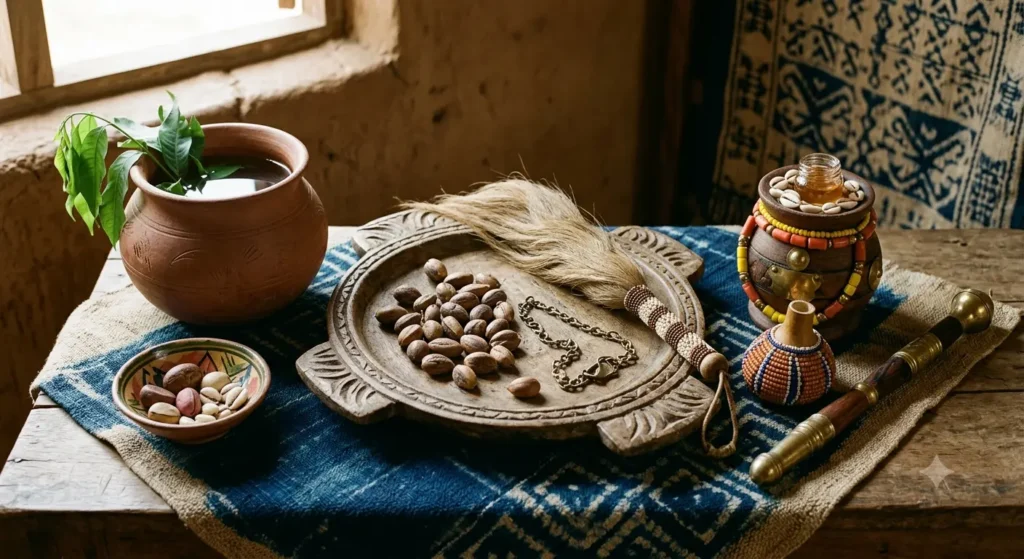
The Orishas are central to Yoruba religious tradition and remain an important part of spiritual life in communities connected to Yoruba heritage around the world.
For people discovering Yoruba spirituality for the first time, however, understanding the Orishas can be confusing. They are sometimes described simply as “gods,” while other sources call them spirits, divine beings, forces of nature, or intermediaries between the human and divine realms.
These descriptions can provide a starting point, but none fully captures the complexity of the Orishas within Yoruba religious thought.
The word Orisha refers to sacred divine beings whose traditions are connected to Yoruba religious practice, mythology, ritual, and understandings of the relationship between the divine world and human life. Academic research on traditional Yoruba religion emphasizes that Orishas occupy a central position in religious practice and are understood in relation to both Olodumare and humanity.
Yoruba religious traditions also influenced and became part of several religious traditions in the African diaspora, including Regla de Ocha, commonly known as Santeria, in Cuba. These traditions share important historical connections but should not automatically be treated as identical.
In this guide, we will explore what Orishas are, their place in Yoruba tradition, the relationship between Orishas and Olodumare, and some of the best-known Orishas.
What Are the Orishas?
Orishas are sacred divine beings in Yoruba religious tradition.
They are connected with different aspects of the divine order, nature, human life, mythology, and religious practice. Their roles and characteristics are expressed through stories, oral traditions, rituals, praise poetry, symbols, and relationships within religious communities.
The English word “gods” is sometimes used to describe Orishas, but this translation can be misleading.
Academic research describes Orishas as occupying a distinctive position between the divine realm and the human realm. They are associated with Olodumare, the Supreme Being, while also having important roles within human religious life.
For this reason, it is more useful to understand Orishas within the worldview of Yoruba tradition rather than trying to fit them into a strictly Western religious category.
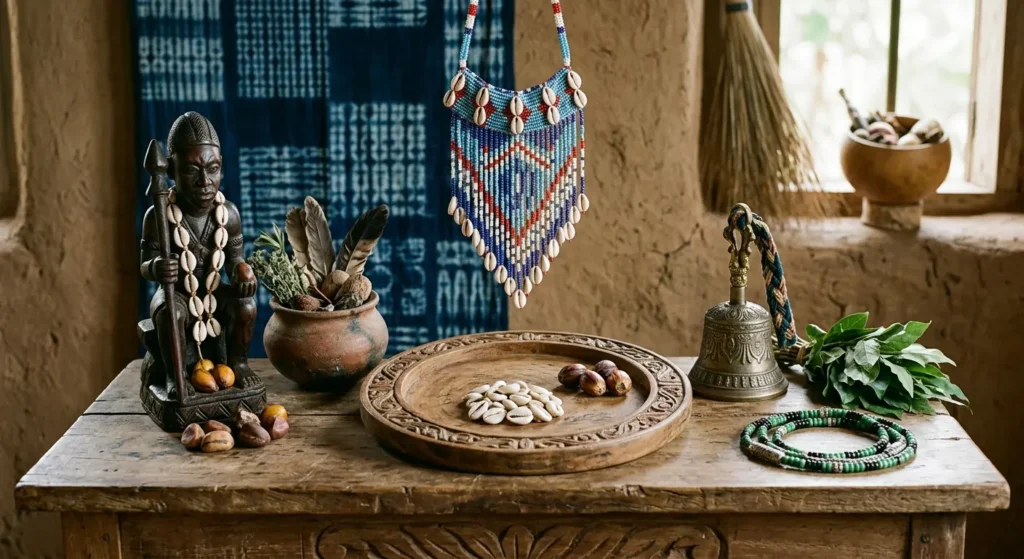
What Does the Word Orisha Mean?
The term Orisha, also written as Orisa or Oricha in different contexts, refers to these sacred divine beings.
Spelling and pronunciation can vary depending on language, region, and religious tradition.
You may therefore encounter different forms of the same name when researching Yoruba spirituality, Afro-Cuban traditions, or other African diaspora religions.
These differences are not necessarily contradictions. They often reflect the movement of Yoruba traditions across languages, cultures, and historical environments.
The Role of Orishas in Yoruba Tradition
Orishas have a central place in Yoruba religious practice.
Their traditions are connected to mythology, nature, human life, morality, religious devotion, and the relationship between people and the divine.
Different Orishas are associated with different aspects of existence, but their significance goes beyond assigning each one a single “meaning.”
For example, an Orisha may be associated with particular natural forces, occupations, qualities, stories, communities, or forms of religious practice. These associations can be much more complex than the short descriptions commonly found in social media posts or generalized spiritual websites.
Yoruba religious knowledge has historically been transmitted through oral traditions, stories, ritual practice, praise poetry, and religious communities.
That means understanding an Orisha is not simply a matter of memorizing:
- a color;
- a number;
- a symbol;
- an animal;
- a natural element; or
- a list of supposed personality traits.
Those elements may be meaningful within particular traditions, but they do not represent the entire religious tradition.
Orishas and Olodumare
To understand the Orishas, it is also important to understand their relationship with Olodumare.
Olodumare is understood within Yoruba religious thought as the Supreme Being.
The Orishas are not simply interchangeable with Olodumare. Academic research on traditional Yoruba religion distinguishes the Supreme Being from the Orishas and describes the Orishas as sacred divine beings connected to both the divine and human realms.
This relationship is important because it helps explain why describing Yoruba tradition simply as a system of “many gods” can miss important aspects of its theology.
The Orishas have their own identities, stories, functions, and religious traditions while remaining connected to a broader divine order.

How Are Orishas Connected to Nature and Human Life?
Many Orisha traditions are connected to aspects of nature and human experience.
These connections can include:
- rivers and bodies of water;
- thunder and lightning;
- iron and metalworking;
- roads and movement;
- fertility;
- agriculture;
- wisdom;
- creation;
- transformation;
- community;
- human relationships.
However, these associations should not be interpreted as rigid categories that completely define an Orisha.
An Orisha’s identity can involve mythology, history, religious practice, moral ideas, natural forces, and relationships with practitioners.
This complexity is one reason why individual Orishas deserve their own detailed articles.
Major Orishas in Yoruba Tradition
Yoruba tradition includes many Orishas, and different communities and sources may emphasize different figures.
Some of the best-known Orishas include Elegua/Eshu, Oshun, Yemaya, Shango, Ogun, Obatala, o ya, Oshosi, and Orunmila, among others.
Below is an introduction to several major figures. These brief descriptions are intentionally broad; individual articles can explore their histories and traditions in greater depth.
Elegua
Elegua, related to Eshu/Elegba in Yoruba contexts, is one of the most widely recognized Orisha figures in Yoruba and African diaspora traditions.
He is associated in different traditions with roads, crossroads, communication, choices, and movement.
The traditions surrounding Eshu and Elegua can differ between Yoruba religious contexts and Afro-diasporic traditions, so it is important not to treat every description as universally applicable.
Continue reading:
Who Is Elegua in Yoruba Tradition?
Oshun
Oshun is an important Orisha associated in Yoruba tradition with the Osun River.
Her traditions include associations with beauty, fertility, sweetness, love, prosperity, and human relationships, although these associations should be understood within their broader religious and cultural context.
Oshun is also deeply connected to Yoruba mythology and religious practice.
Continue reading:
Private: Oshun: Meaning, Symbols, Traditions & Spiritual Significance
Yemaya
Yemaya is particularly prominent in several Afro-diasporic traditions and is associated with motherhood and bodies of water, especially the sea, in many Caribbean contexts.
Her history demonstrates how Orisha traditions traveled from West Africa into the Americas and developed within different cultural environments.
The name, attributes, stories, and associations connected with Yemaya can vary between Yoruba and Afro-diasporic traditions.
Continue reading:
Yemaya: Meaning, Traditions & Connection to the Ocean
Shango
Shango, also written Sango or Ṣàngó, is a major Orisha in Yoruba tradition.
He is strongly associated with thunder, lightning, power, justice, and kingship.
Shango’s traditions also demonstrate how religious narratives can connect divine beings with historical memory, political authority, nature, and oral tradition.
Future article:
Shango: Meaning, Symbols, Traditions & Significance
Ogun
Ogun is an important Orisha traditionally associated with iron, metalworking, tools, roads, hunting, labor, and technology.
His traditions reflect the historical importance of iron and metalworking within Yoruba society.
Ogun is also an important figure in several African diaspora traditions.
Future article:
Ogun: Meaning, Symbols, Traditions & Significance
Obatala
Obatala is an important Orisha associated in Yoruba tradition with creation, wisdom, purity, and moral qualities.
Stories surrounding Obatala form part of the broader body of Yoruba religious narratives concerning creation and human existence.
Future article:
Obatala: Meaning, Traditions & Spiritual Significance
o ya
o ya is associated with winds, storms, transformation, and the Niger River in Yoruba tradition.
Her stories contain themes of movement, change, strength, and transformation.
As with other Orishas, her traditions can be understood differently depending on the specific religious and cultural context.
Future article:
o ya: Meaning, Symbols, Traditions & Significance
Oshosi
Oshosi is traditionally associated with hunting and the forest and is an important Orisha in both Yoruba and Afro-diasporic religious traditions.
His traditions can also involve themes of justice, precision, and the pursuit of what is right.
Future article:
Oshosi: Meaning, Traditions & Spiritual Significance
Orunmila
Orunmila, also known as Orula in some Afro-Cuban traditions, is closely connected with wisdom and divination, particularly within the Ifa tradition.
His inclusion also demonstrates why the subjects of Orishas and Ifa are closely related but should not simply be treated as the same topic.
Future article:
Orunmila and Ifa: Understanding Wisdom and Divination
Yoruba Tradition and the African Diaspora
The history of the Orishas cannot be separated from the history of the Yoruba diaspora.
Yoruba religious traditions became sources for several religious traditions that developed throughout the Americas. Scholars describe Yoruba civilization and religion as a major source for religious traditions that developed across Latin America, the Caribbean, and the United States.
One important example is Regla de Ocha, commonly known as Santeria, which developed in Cuba within the historical context of the African diaspora.
The relationship between Yoruba religion and Santeria is therefore important, but the terms should not be used as if they were completely interchangeable.
Yoruba religious traditions developed in West Africa.
Regla de Ocha developed in Cuba and the wider African diaspora.
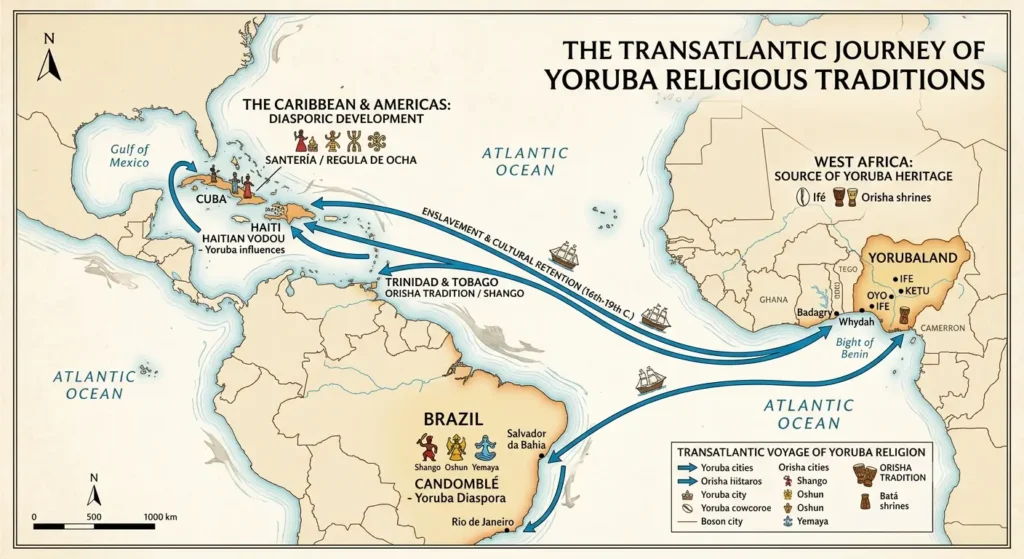
They share historical and religious connections, including traditions concerning Orishas, while also having their own terminology, practices, histories, and communities.
Understanding this history helps explain why readers may encounter different names, spellings, stories, and practices when researching the same Orisha.
Yoruba Orishas and Santeria Orishas: Are They the Same?
The short answer is: they are historically connected, but they should not simply be treated as identical.
The Orisha traditions that developed in the Americas were shaped by the historical experiences of African-descended communities and by the cultural environments in which those traditions survived and developed.
As a result, a person researching Oshun, Shango, Elegua, or Yemaya may encounter different traditions depending on whether they are reading about:
- traditional Yoruba religion;
- Yoruba religious traditions in Nigeria;
- Regla de Ocha;
- Lukumí traditions;
- or another Afro-diasporic religious tradition.
This distinction is particularly important for anyone trying to learn about Orishas respectfully.
There is no need to erase these differences in order to recognize their historical connections.
Why Are the Orishas Important?
The Orishas are important because they are part of a living religious tradition that connects spirituality with mythology, nature, history, community, and human life.
For practitioners, religious relationships with Orishas can involve forms of devotion, ritual, offerings, divination, community participation, and other practices depending on the tradition.
For students of Yoruba culture and religion, the Orishas also provide an important way to understand Yoruba philosophy, mythology, history, and artistic expression.
Most importantly, the Orishas should not be reduced to internet lists of “meanings.”
Learning about an Orisha properly requires attention to the tradition in which that Orisha is being discussed.
How to Learn About the Orishas Respectfully
If you are beginning to explore Yoruba spirituality, start with reliable educational sources and pay attention to the cultural context behind what you read.
A respectful approach includes:
- learning about Yoruba history and culture;
- distinguishing Yoruba religious traditions from their African diaspora counterparts;
- recognizing that different communities may preserve different traditions;
- avoiding sensationalized descriptions of African religions;
- avoiding unsupported supernatural claims presented as established facts;
- using academic and culturally informed sources;
- understanding that some religious knowledge is transmitted within religious communities rather than through public websites.
Most importantly, approach the subject as a living religious tradition rather than as a collection of symbols or spiritual products.
Exploring Orisha Traditions
Learning about the Orishas is only the beginning.
Each Orisha has a much broader body of stories, traditions, symbolism, and religious context that deserves to be explored independently.
At Botanica Ire Orishas, we are building educational resources to help readers explore these traditions while discovering spiritual products connected with their areas of interest.
Explore our [Osha collection] to discover spiritual items connected with Orisha traditions.
You can also continue learning through our upcoming guides:
- Who Is Elegua in Yoruba Tradition? Meaning, Roles & Symbolism
- Oshun: Meaning, Symbols, Traditions & Spiritual Significance
- Yemaya: Meaning, Traditions & Connection to the Ocean
- What Is Ifa? Understanding the Yoruba Divination Tradition
- Orunmila and Ifa: Understanding Wisdom and Divination
The more you explore the Orishas, the more important it becomes to understand the traditions, histories, and communities behind them.